
What coupler height are we modeling?
The prototype freight-car reference used in our HO height gauge is a coupler centerline between 32½ and 34½ inches above the rail, allowing for the difference between loaded and empty cars. The passenger-equipment reference in these guides is 35 inches.
For a specific model, check photographs and drawings of the equipment you are representing. Use the HG87 gauge to check an HO freight installation.
Do scale couplers mean closer coupling?
The coupler head is only part of the answer. Shank length, mounting position and the distance from the car body to the coupler all affect the result. Our coupling-distance guide explains how these dimensions relate to the prototype.
What does a prototype draft gear box look like?
“Draft gear box” is a familiar model-railroad term. On the prototype shown here, the draft gear is built into the car’s underframe rather than housed in a separate box hung below it.
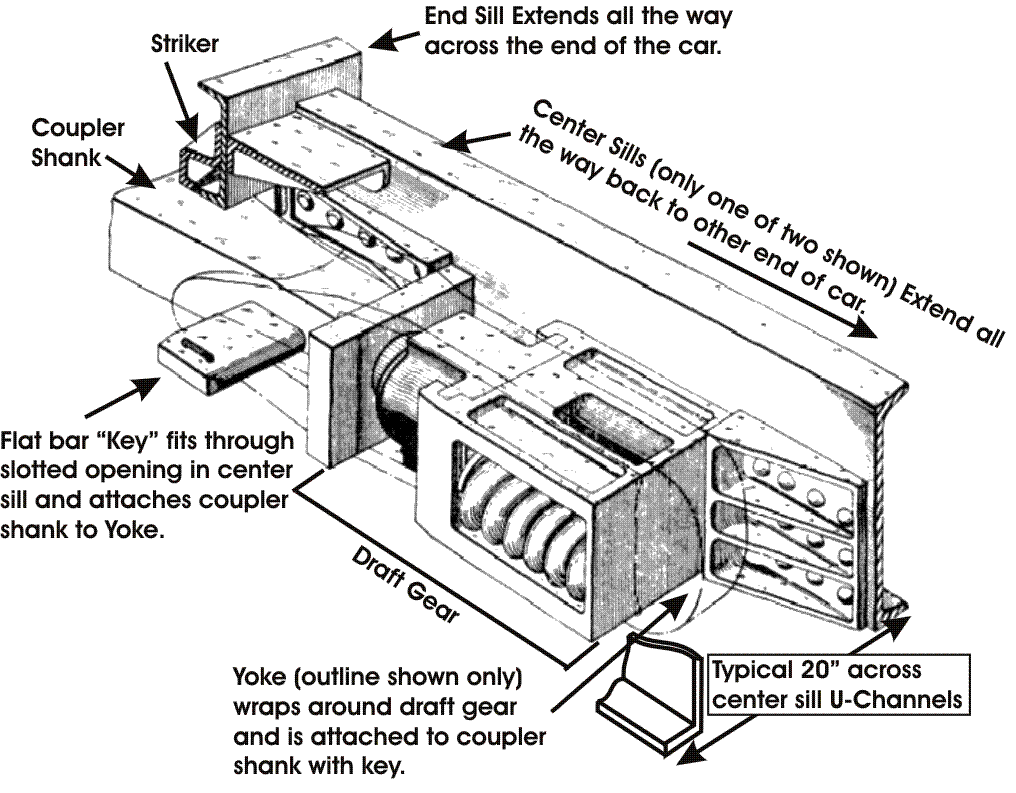
In this example, the center sill measures 20 inches across the channels—about 0.230 inches in HO. That narrow structure is part of the reason a slim draft gear installation can make such a visible difference to a model.
The springs absorb pulling and compressive forces along the train. They do not center the coupler. The coupler can swing sideways within the limits of the surrounding structure.
This drawing illustrates one historical arrangement, not every draft gear design. Cushion draft gear and other installations have their own details. For a narrow HO installation, see the narrow-shank range; draft gear boxes are sold separately.