
If a metal coupler will not operate after break-in and inspection, it may need to come apart. Remove it from the model first. Acetone can soften cyanoacrylate, but it is highly flammable and can damage paint, plastic and resin. Follow the solvent label and safety guidance, keep it away from ignition sources, and use a compatible container with a lid. Place the coupler upside down in the solvent and check after about 15 minutes; the time needed depends on the adhesive. Do not substitute nail-polish remover containing oils or moisturizers.
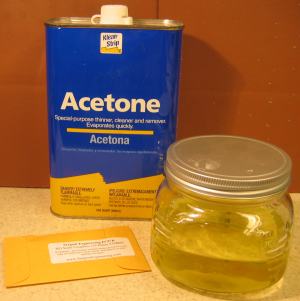
Once the adhesive has softened, lift out the coupler with suitable tweezers and separate the top and bottom castings. Needle-nose pliers may help grip the bottom casting; avoid crushing or distorting it. Gently tap the top casting over a parts tray to release the ball. Acetone may soften or remove the finish, as shown in the photo. Allow the parts to dry before handling the painted surfaces, and be prepared to refinish them; paint recovery is not guaranteed.

Allow the parts to dry completely in a ventilated area away from heat, sparks and flames. Inspect for remaining adhesive before diagnosing the mechanism.
It seems all the troublesome couplers have something different that makes them troublesome. For this particular coupler I could drop the ball into the cylinder then turn the top casting over and the ball just didn't want to fall out. No amount of burnishing with the toothpick end seemed to help. Finally, I chucked a #59 drill in a pinvise so its shank was exposed (not the hole cutting end of the drill). I spun that in the cylinder a little and the problem went away.
The rebuilt coupler works like a champ now.
